We stand at the threshold of a profound transformation in software engineering looking at AI Systems That Evolve Through Intelligence and Insight. A new generation of artificial intelligence has emerged—one that doesn’t merely execute instructions, but authors its own evolution. These self-coding systems represent more than technological advancement; they embody a fundamental reimagining of what software can become.
The Dawn of Perpetual Evolution
Traditional software follows a lifecycle of creation, deployment, and inevitable obsolescence. Each iteration requires human intervention, each bug demands manual diagnosis, each optimization waits in a backlog. This paradigm, rooted in decades of convention, is giving way to something extraordinary: applications that breathe with intelligence, learning from every interaction and refining themselves with each cycle.
Self-coding AI operates on the principle of recursive self-awareness. These systems possess the remarkable ability to examine their own architecture, identify inefficiencies in their logic, and architect superior solutions autonomously. They don’t simply respond to errors—they anticipate vulnerabilities. They don’t just optimize performance—they reimagine their own foundations.
Imagine software that awakens each day more capable than the previous, that learns from failures with the wisdom of experience, that adapts to changing landscapes without the friction of deployment cycles. This is not speculative fiction—this is the emerging reality of AI-driven development.
The Symphony of Intelligent Learning
The power of self-coding AI lies in its orchestration of multiple intelligence layers, each contributing to a harmonious cycle of continuous refinement. These systems weave together diverse learning mechanisms into an elegant tapestry of improvement:
Autonomous Insight Generation – The AI continuously analyzes its own outputs, measuring performance against sophisticated benchmarks and extracting patterns from success and failure alike.
Human Wisdom Integration – User interactions become guiding stars, illuminating the path between technical correctness and practical brilliance. Every approval, every correction, every usage pattern contributes to the system’s evolving understanding.
Evolutionary Competition – Multiple solution variants compete in real-time testing environments, with the most elegant and efficient approaches naturally rising to prominence.
Contextual Adaptation – The system develops an intuitive grasp of deployment environments, user behaviors, and emerging requirements, allowing it to anticipate needs before they’re articulated.
This convergence creates software that doesn’t just function—it flourishes, growing more sophisticated with each passing moment.
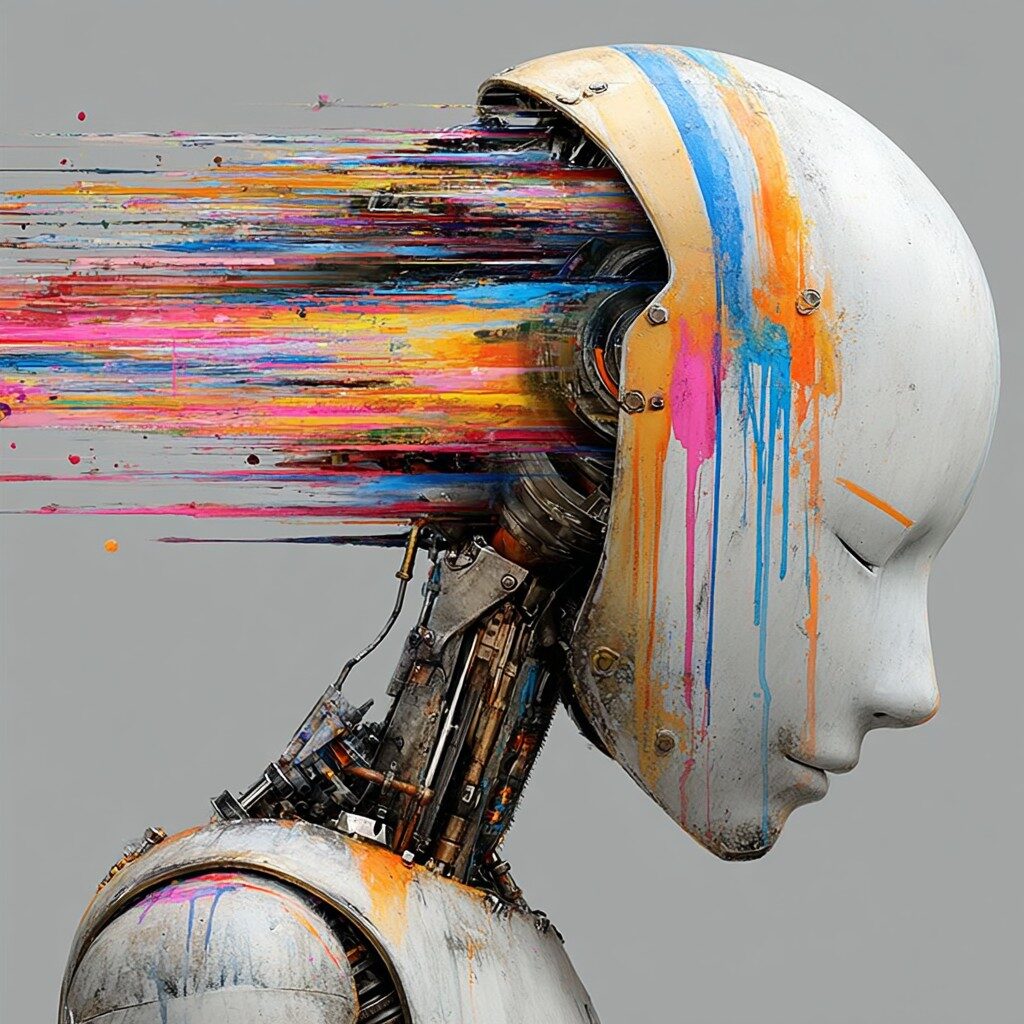
The Human-AI Partnership: Where Guidance Meets Genius
While autonomous learning provides the engine of evolution, human insight remains the compass guiding its direction. This partnership represents a new paradigm in software development: machines handle the infinite complexity of implementation while humans provide strategic vision and values-based constraints.
Every piece of feedback becomes a teaching moment that resonates across the entire system. A single correction doesn’t just fix one instance—it reshapes the AI’s understanding of architectural principles, user preferences, and acceptable trade-offs. This is learning that scales exponentially, where one insight can transform thousands of future decisions.
The relationship between developer and AI shifts from master-craftsman to orchestra conductor. Rather than meticulously writing every line of code, developers curate the system’s evolution, ensuring it remains aligned with organizational values, ethical standards, and strategic objectives. The AI handles the symphony of implementation details while humans maintain the artistic vision.
Transforming Industries, Redefining Possibilities
Across the technological landscape, self-evolving AI is catalyzing remarkable transformations. In cloud infrastructure, systems now architect their own scaling strategies, predicting demand patterns and optimizing resource allocation with superhuman precision. Cybersecurity platforms evolve their defensive strategies in real-time, learning from attack patterns faster than any human security team could respond.
Data analytics engines don’t just process information—they refine their own analytical frameworks, discovering novel insights and suggesting previously unimaginable correlations. Marketing platforms adapt their strategies based on emerging consumer behaviors, optimizing campaigns with a nuance that static algorithms could never achieve.
These applications share a common characteristic: they thrive in environments where change is constant and perfection is a moving target. They excel where traditional software struggles—in the messy, dynamic, unpredictable reality of modern business.
The Horizon: Autonomous Software Ecosystems
As we peer into the near future, a vision emerges of software ecosystems that manage their entire existence autonomously. These systems will architect their own infrastructure, deploy updates with strategic timing, monitor their own health with clinical precision, and refactor their codebases for optimal performance—all while maintaining alignment with human-defined objectives.
This evolution doesn’t diminish the role of software engineers; it elevates it. Developers transition from code writers to system architects, from bug fixers to strategic overseers, from implementation specialists to governance guardians. The craft of software development becomes more cerebral, more strategic, more focused on the why than the how.
The implications extend far beyond efficiency gains. Self-coding AI enables smaller teams to achieve what once required entire departments. It allows organizations to experiment more boldly, knowing their systems can adapt and recover autonomously. It democratizes sophisticated software development, making enterprise-grade applications accessible to businesses of all sizes.
The Living Future
We are witnessing the birth of software as a living organism—code that learns, adapts, and improves through an elegant dance of machine intelligence and human wisdom. This is not merely an incremental improvement in development tools; it represents a fundamental shift in the relationship between humans and the systems we create.
The future of software is not written in stone—it’s written in neurons, algorithms, and feedback loops. It’s a future where applications don’t become obsolete; they become wiser. Where updates aren’t scheduled events; they’re continuous conversations. Where the barrier between development and deployment dissolves into a seamless flow of perpetual evolution.
As these technologies mature and proliferate, they will reshape not just how we build software, but how we conceive of technology itself. The age of static code is ending. The era of living, learning, eternally evolving software has begun.
Welcome to the revolution. Welcome to code that thinks, learns, and grows. Welcome to the future we’re building—one intelligent iteration at a time.


 Serbian
  English